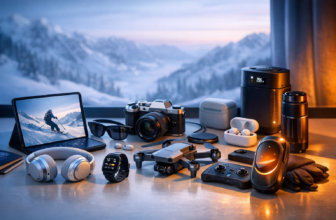
Essential Tech for Your Next Road Trip
Nothing kills a good road trip faster than a dead phone, spotty navigation, or a car that suddenly throws a warning light in the middle of nowhere. Trevor and I were discussing the gear we always pack, and it’s clear that the right essential tech for your next road trip isn’t about flashy gadgets—it’s about staying safe, comfortable, and on-schedule. If you’ve ever fumbled with charging cables at a rest stop or lost signal in the mountains, this list is for you.
Disclaimer: As an Amazon Associate, TrevMart earns from qualifying purchases at no extra cost to you.
1) Power & Charging: Keep Everything Alive
On a road trip, your phone becomes your GPS, your camera, your playlist, and your emergency line. That means power is priority number one.
Fast Car Charger (USB-C PD + USB-A)
A basic 5W car charger won’t cut it anymore. Look for a compact car charger with USB-C Power Delivery so your phone can recover fast between stops.
- What to look for: 30W–45W USB-C PD for modern phones and tablets
- Why it matters: quick top-ups mean you don’t start the next leg at 12%
Pros:
- Charges newer phones at full speed
- Usually small enough to leave plugged in
Cons:
- Cheap models can overheat or underdeliver wattage
Quality Cables (One Spare Minimum)
The cable is often the weak link. Pack at least one spare USB-C or Lightning cable, ideally braided, so you’re not stuck buying an overpriced gas-station cord.
Power Bank for Backup
A power bank is your insurance policy. It’s especially useful when you’re out of the car—scenic overlooks, roadside hikes, long lines, or a breakdown.
- Sweet spot: 10,000–20,000mAh
- Benefit: enough reserve to charge a phone multiple times without hunting for outlets
2) Navigation That Doesn’t Quit
Phone nav is great until you hit dead zones, your phone overheats on the dash, or your battery drains faster than expected. A little planning saves a lot of stress.
Offline Maps Download (Before You Leave)
This one is free, but it’s essential. Download your route area on Google Maps or Apple Maps while you’re on Wi-Fi.
- Benefit: navigation still works when the signal disappears
- Extra win: less battery drain hunting for towers
Magnetic Phone Mount or Dash Mount
A solid mount keeps your phone in your line of sight without being a distraction. The goal is stable, one-hand use, and no wobble when the road gets rough.
Pros:
- Safer glanceable directions
- No more phone sliding under seats
Cons:
- Some mounts struggle in extreme heat (check reviews)
3) Safety Tech You’ll Be Glad You Had
Most road trip problems aren’t dramatic—they’re practical: flat tires, dead batteries, minor fender benders. The right gear helps you handle them quickly.
Dash Cam (Front or Front + Rear)
A dash cam is one of those purchases you forget about until you really need it. If something goes wrong, video proof can save time, money, and headaches.
- Look for: 1440p or 4K front recording, wide dynamic range, night performance
- Benefit: better clarity on plates and road signs in tricky lighting
Portable Jump Starter (Lithium)
A compact jump starter can get you moving without waiting for roadside assistance. It’s a must if your trip includes cold weather, older batteries, or long stretches between towns.
- Look for: clear safety protections, strong clamps, and enough peak amps for your engine size
- Benefit: you can self-rescue in minutes
OBD2 Scanner (Basic Bluetooth Model)
If your check engine light comes on mid-trip, an OBD2 scanner tells you whether it’s “stop now” or “monitor it and keep going.” Pair it to your phone and read codes in plain language.
Pros:
- Helps you make informed decisions instead of guessing
- Can clear minor codes after repairs (when appropriate)
Cons:
- Not all cars support every advanced sensor readout
4) Comfort & Convenience Upgrades (Worth It on Long Drives)
Comfort tech doesn’t sound essential—until hour five. These are the items that make your cabin feel organized and less tiring.
Bluetooth FM Transmitter (If Your Car Lacks Modern Audio)
If you’re driving an older car without Bluetooth, an FM transmitter gives you hands-free calls and streaming audio without a head unit upgrade.
- Benefit: better call quality and safer driving than holding your phone
- Tip: choose one with noise reduction and strong charging output
Portable Car Vacuum or Compact Duster
Snacks happen. Dirt happens. A small vacuum keeps the cabin from becoming a mess that annoys everyone by day two.
Sunshade + USB Fans (Hot-Weather Trips)
Heat turns phones sluggish and makes the cabin uncomfortable fast. A good sunshade and small USB fans help keep temps down when parked or idling.
5) Connectivity for Passengers (And Your Sanity)
If you’re traveling with friends, kids, or a co-pilot who works remotely, stable connectivity can prevent “are we there yet” chaos.
Mobile Hotspot (Dedicated Device or Phone Plan Add-On)
A dedicated hotspot can be more stable than tethering all day, and it keeps your phone battery from taking a constant hit.
- Benefit: passengers can stream or work without fighting over one phone’s connection
- Bonus: some hotspots have better antennas than phones
Multi-Port USB Charger for the Back Seat
One charger up front isn’t enough for a car full of devices. A back-seat multi-port hub reduces cable drama and keeps everyone powered.
Martin’s Take: Don’t mount your phone in direct sunlight for hours. Heat is the silent battery killer. If you rely on your phone for navigation, use a vent mount when possible, keep a power bank accessible, and download offline maps before you hit the highway.
Quick Packing Checklist (Tech Edition)
If you want the fast version, here’s what we consider the core kit for most trips:
- USB-C PD car charger + spare cable
- 10,000–20,000mAh power bank
- Sturdy phone mount
- Dash cam
- Portable jump starter
- OBD2 scanner (optional but smart for older cars)
- Mobile hotspot or upgraded phone plan (optional for groups)
Conclusion: The Right Tech Makes the Trip Smoother
The best road trip tech doesn’t complicate your drive—it removes friction. Start with power and navigation, then add safety gear like a dash cam and jump starter. After that, comfort and connectivity upgrades make long days behind the wheel easier for everyone.
What’s the one piece of road trip tech you refuse to travel without—and what did it save you from?