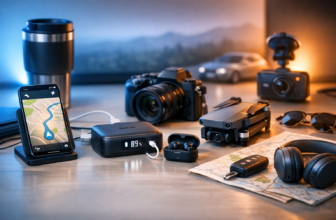
Essential Travel Tech for Your 2026 Winter Vacation
Winter trips are supposed to feel magical, not stressful. But between dead phone batteries in the cold, spotty airport Wi‑Fi, and tangled cables in your carry-on, travel can turn into a tech headache fast. Trevor and I were discussing what we actually pack now, and the list is shorter than you’d think—just smarter. Here’s our guide to essential travel tech for your 2026 winter vacation, built around real problems you’ll run into on the road.
Disclaimer: As an Amazon Associate, TrevMart earns from qualifying purchases at no extra cost to you.
1) A cold-proof power setup (because winter kills batteries)
Phones, cameras, and even earbuds drain faster when temps drop. Your goal isn’t “more gadgets.” It’s reliable power that works in a coat pocket, on a bus, or during a long delay.
High-capacity power bank (20,000mAh class)
A 20,000mAh power bank is the sweet spot for winter travel. It’s big enough for multiple phone recharges and still reasonable for carry-on use.
- What to look for: USB-C PD output so your phone charges fast even in a cold terminal.
- Benefit: Enough reserve power to handle a full day of maps, photos, boarding passes, and emergency calls.
- Nice-to-have: A digital readout so you know exactly how much battery is left.
GaN wall charger (65W is the travel MVP)
One compact charger can replace a laptop brick, phone charger, and tablet adapter. GaN chargers stay small while delivering serious power.
- Target wattage: 65W so you can charge a laptop and a phone without crawling behind hotel nightstands for extra outlets.
- Ports: At least one USB-C, ideally two USB-C plus one USB-A for older cables.
Short USB-C cables + one rugged long cable
Short cables keep your seat-back setup clean on a plane. One longer, tough cable saves you when outlets are awkwardly placed.
- Benefit: Less cable mess, fewer “where did that cord go?” moments, faster packing.
2) Connectivity that works in airports, hotels, and rural ski towns
Public Wi‑Fi is still unreliable, and in some places it’s risky. A strong connection keeps your family synced, your GPS accurate, and your payments working.
Travel eSIM (or dual-SIM phone plan)
If your phone supports eSIM, it’s one of the easiest upgrades you can make before you fly. You can land with data already working.
- Benefit: Skip SIM kiosks and avoid getting stuck without maps when you need them most.
- Pro: You can keep your main number active for texts while using cheaper data on the eSIM.
- Con: Some older phones still don’t support eSIM or only support one active profile at a time.
Pocket travel router (optional, but clutch for families)
If you travel with multiple devices—phones, tablets, handhelds—a pocket router can create one private network. It can also make hotel Wi‑Fi less painful by reducing reconnect chaos.
- Benefit: One login, many devices. Great for parents managing kids’ tablets.
- Pro: More consistent connection on devices that hate captive portals.
- Con: Another device to charge and manage.
3) Audio gear that makes travel calmer (and warmer)
Planes, trains, and busy lobbies wear you down. Good audio gear isn’t a luxury in winter—it’s how you stay comfortable and less stressed.
Noise-canceling headphones or ANC earbuds
Active noise canceling helps you rest on flights and reduces fatigue. In cold destinations, over-ear headphones also double as ear warmers.
- What to look for: Strong ANC, transparency mode for announcements, and solid wind-noise handling.
- Benefit: Fewer headaches and better sleep during long travel days.
- Pro: Over-ears often have better microphones for calls.
- Con: Over-ears take more bag space than earbuds.
Compact Bluetooth speaker (only if it fits your trip)
If you’re renting a cabin or staying with friends, a small speaker can improve downtime without relying on a TV’s weak audio.
- Benefit: Better sound for podcasts or music while you’re cooking, packing, or getting ready.
- Pro: Many rugged models handle snow-melt splashes and steamy bathrooms.
- Con: Not useful if you’re hotel-hopping every night.
4) Camera and phone accessories for snow, gloves, and low light
Winter vacations are photo gold—until your hands are freezing and your phone can’t stay stable. A couple accessories will noticeably improve your shots.
MagSafe (or clamp) mini tripod + grip
A small tripod helps with night shots, family photos, and stable video. MagSafe versions are quick, but a clamp works for any phone.
- Benefit: Stable photos in low light so your ski lodge shots don’t turn into blurry messes.
- Pro: Easier group pictures without asking strangers.
- Con: Cheap tripods wobble—don’t cut corners here.
Touchscreen-friendly gloves (or glove liners)
Taking photos with bare hands in winter isn’t fun. Gloves that work on screens let you use maps and cameras without losing feeling in your fingertips.
- Benefit: You’ll actually use your phone outdoors instead of avoiding it.
Lens wipes + a zip pouch
Snowflakes, condensation, and pocket lint ruin shots fast. A few wipes and a small pouch keep your “camera kit” organized.
- Benefit: Cleaner photos and fewer “why is everything hazy?” surprises.
5) Organization tech that reduces stress (and lost gear)
Winter travel means more layers, more pockets, and more chances to misplace stuff. A little organization goes a long way.
Bluetooth tracker tags
Put one in your checked bag, one on your keys, and consider one in a camera pouch. It’s cheap insurance when luggage carousels get chaotic.
- Benefit: You can locate missing items faster and reduce “did we leave it at the café?” anxiety.
- Pro: Helpful for skis and gear bags, not just suitcases.
- Con: Trackers aren’t magic—range and ecosystem support matter.
Tech pouch (structured, not floppy)
A good tech pouch keeps cables, adapters, SD cards, and earbuds in one place. This is one of those “small buy, big impact” items.
- Benefit: Faster security checks and no more digging through your bag for a charging cable.
- What to look for: Elastic loops, a zip pocket for tiny items, and enough structure to keep its shape.
Martin’s Take: Keep your power bank warm
Cold battery chemistry is real. If you’re outdoors for hours, keep your power bank in an inner jacket pocket (close to your body), not in a backpack. You’ll get better performance, and your phone stays topped up when you need it most—like when you’re finding a shuttle stop after a late run.
6) A safer way to charge and pay while traveling
Winter travel hubs are crowded, and that’s when small security habits matter most. You don’t need to be paranoid, just prepared.
USB data blocker (a “charge only” adapter)
If you ever use public USB ports, a data blocker prevents data transfer while still allowing charging.
- Benefit: Low-cost protection against sketchy public charging stations.
- Pro: Tiny and easy to keep on a keyring or in your tech pouch.
- Con: Best solution is still using your own wall charger whenever possible.
Digital wallet + a backup card setup
Use a mobile wallet where available, but always travel with a backup physical card stored separately. Winter coats and gloves make it easy to drop things.
- Benefit: Faster checkout, fewer card swipes, and easier recovery if one payment method fails.
What we’d pack for most 2026 winter trips (the short list)
If you don’t want to overthink it, this combo covers nearly every winter vacation scenario.
- 20,000mAh USB-C PD power bank
- 65W GaN multi-port wall charger
- Two short USB-C cables + one rugged long cable
- Noise-canceling headphones or ANC earbuds
- Bluetooth tracker tag for luggage + keys
- Structured tech pouch
- Mini tripod/grip for your phone
- USB data blocker (optional, but smart)
Final verdict: buy less, choose better
The best travel tech isn’t the fanciest—it’s the gear that prevents the predictable winter problems: dead batteries, bad connections, and lost essentials. Trevor and I focus on a tight setup that keeps phones charged, bags trackable, and travel days calmer.
What winter destination are you planning for 2026, and what’s the one piece of travel tech you refuse to leave behind?