Smart Water Bottles: Do You Really Need Tech to Hydrate?
You know the feeling: it’s 3 p.m., your head starts to fog up, and you realize you’ve had exactly two sips of water all day. That’s the moment smart water bottles promise to fix—nudging you to drink before you hit the wall. Trevor and I were discussing whether a smart water bottle is genuinely useful or just another gadget that ends up in the cabinet after a week. If you’ve been shopping for a smart water bottle, here’s what you actually need to know.
Disclaimer: As an Amazon Associate, TrevMart earns from qualifying purchases at no extra cost to you.
What Is a Smart Water Bottle (and What Makes It “Smart”)?
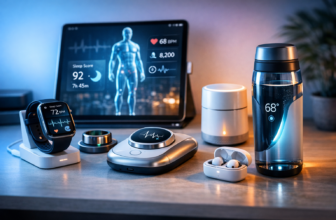
A smart water bottle is a bottle with sensors and/or an app that helps you track water intake. Most models use a glowing reminder, push notifications, or automated tracking to push you toward a daily goal.
Some bottles measure how much you drink directly. Others estimate intake by asking you to log refills or sips manually.
Common features you’ll see
- Hydration reminders: lights on the bottle, phone notifications, or both so you stop forgetting.
- Intake tracking: automatic sensors or manual logging to show how much you’ve had today.
- Goal setting: personalized targets based on weight, activity, or climate so your “8 glasses” isn’t a random guess.
- Temperature display (some models): handy if you care about drinking water cold or tracking hot beverages.
- Find-my-bottle alerts: useful if you misplace things constantly.
Do Smart Water Bottles Actually Help You Drink More?
For many people, yes—but not because the tech is magical. They work for the same reason calendars and to-do apps work: consistent reminders and visible progress change behavior.
If you’re the type who ignores notifications, a smart bottle won’t fix that. But if you respond well to prompts and streaks, it can be surprisingly effective.
Who benefits most
- Office and remote workers: easy to get “in the zone” and forget hydration for hours.
- Fitness routines: helps you connect hydration to workouts and recovery, especially if you sweat a lot.
- People who dislike plain water: seeing a goal can motivate you to add flavor drops or switch to sparkling water (if it fits your routine).
- Anyone with frequent headaches: dehydration is a common contributor, and consistent intake can reduce the “why do I feel awful?” days.
Smart Water Bottle Pros & Cons (The Real-World Version)
Pros
- Removes guesswork: you’ll know if you’re under-drinking instead of assuming you’re “fine.”
- Builds habits faster: reminders + progress tracking can turn hydration into autopilot.
- Great for routine-driven people: if you love metrics, you’ll probably use it.
- Some integrate with fitness apps: useful if you already track steps, workouts, or sleep.
Cons
- App dependence: many features require installing an app and keeping Bluetooth on.
- Battery charging: one more thing to recharge, even if it’s only every few days/weeks.
- Not always accurate: “smart” doesn’t guarantee perfect measurement, especially with manual logging.
- Price: you can spend premium money on something a $15 bottle can technically do.
What to Look for Before You Buy
Smart bottles vary a lot. Two products can look identical and deliver totally different day-to-day experiences.
Here’s what we focus on at TrevMart when deciding if one is worth it.
1) Tracking method: automatic vs. manual
Automatic tracking is the easiest to stick with because it reduces friction. If the bottle can’t accurately detect intake, you’ll stop caring after the novelty wears off.
Manual tracking can still work if you’re disciplined, but it’s basically a fancy reminder bottle at that point.
2) Reminder style (lights vs. notifications)
If you’re in meetings or at a desk, a subtle glow can be more effective than a phone buzz you’ll swipe away. If you travel a lot, notifications may keep you on track when the bottle isn’t in view.
3) Battery life and charging
Look for a charging method you’ll actually use. USB-C is the easiest. Proprietary chargers are where good gadgets go to die.
4) Cleaning and durability
A bottle you can’t clean easily becomes a problem fast. Prioritize wide-mouth designs and clear cleaning instructions.
Also check how the “smart” parts are protected. If one drop kills the sensor, it’s not a daily-carry product.
5) Material and insulation
- Stainless steel insulation: keeps water cold longer, great for warm climates or long workdays.
- Plastic: often lighter and cheaper, but can hold odors over time.
- Glass: clean taste, heavier, and not ideal for rough commutes.
Are Smart Water Bottles Worth It If You Already Own a Good Bottle?
If you already drink enough water daily, a smart bottle won’t change your life. It may even be annoying.
But if you routinely forget to hydrate, it can be a practical upgrade—like moving from a basic alarm clock to a phone that supports multiple reminders and routines.
TrevMart Tip (Martin’s Take)
Don’t buy a smart water bottle as your “first” hydration fix. Try a two-day test: put a regular bottle within arm’s reach and set four daily alarms (morning, late morning, mid-afternoon, evening). If that works, you don’t need the tech. If you keep ignoring alarms or forgetting to refill, a smart bottle with glow reminders and automatic tracking is more likely to stick.
Smart Water Bottles vs. Simple Alternatives
Before you spend, it’s fair to ask: can you get 80% of the benefit for 20% of the cost? In many cases, yes.
Low-tech options that work
- Time-block reminders: phone alarms or calendar events that repeat daily.
- Marked bottles: bottles with time-of-day measurement lines that make goals obvious.
- Habit pairing: drink after coffee, after each meeting, or every time you stand up.
- Keep water visible: the easiest “hack” is putting the bottle where your eyes land constantly.
Who Should Skip a Smart Water Bottle?
Not every product is for every person. If any of these sound like you, save the money.
- You hate apps and notifications: you’ll turn everything off, then wonder why it “doesn’t work.”
- You need dishwasher-safe everything: many smart lids and sensors don’t belong in a dishwasher.
- You’re rough on gear: if your bottle takes a lot of drops, choose durability over electronics.
- You already hit hydration goals consistently: spend the budget on better coffee, a gym upgrade, or a great insulated bottle instead.
Final Verdict: Do You Really Need Tech to Hydrate?
You don’t need tech to hydrate. A regular bottle and a few reminders can get most people there.
But a smart water bottle can be worth it if you’re genuinely inconsistent, you like tracking progress, and you’ll respond to gentle nudges. When it becomes a habit-builder instead of a novelty gadget, it earns its place.
Your turn: Would hydration reminders help you, or would you ignore them after a week? Tell us how you stay on track (or why it never sticks) in the comments.